
|
|
Humic Acid Powder ၊ |
| Humic Acid Granules များ | |
| Humic Acid Flakes | |
| Humic Acid Crystals | |
| Humic Acid Liquid | |
| Humic Acid Cylinders | |
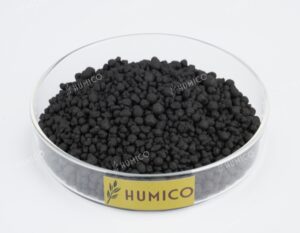
Humic acid benefits plants by increasing plant health and promoting better အာဟာရစုပ်ယူမှု from the soil, stimulating root development, and increasing soil fertility. It acts as a chelator, binding minerals in the soil. This process improves the availability of key nutrients such as nitrogen, phosphorus, and potassium, helping plants thrive.
This makes all fertilizers more efficient and reduces nutrient loss. Furthermore, humic acid encourages microbial activity within the soil, creating a healthier ecosystem that is conducive to optimal plant growth. Since it can retain moisture, this provides plants with a better tolerance to drought conditions, providing them with a stable source of hydration.
Humic acid promotes strong root systems, resulting in healthier and more resilient plants. It is used by farmers and home gardeners alike to increase သီးနှံအထွက်နှုန်းs and improve soil health. Its effectiveness speaks to how vital it can be for sustainable farming practices.

What Is Humic Acid
A natural compound found in soil, humic acid is an important factor in plant health and soil quality. We’ve long known that organic matter, or humus, is the backbone of healthy soils. It enriches nutrient availability, improves water retention, and encourages greater plant health.
To appreciate what makes it so special, it’s worth diving into what exactly humic acid is, where it comes from, and how it differs from similar products.
Definition and Composition
Humic acid is made up of very complicated organic molecules that develop as plant and animal material breaks down. This is a slow process and occurs over a long time. It is very rich in carbon and contains other important elements such as hydrogen, oxygen, and nitrogen.
These three elements bond together to form long, complex, stable molecules. These microporous molecules latch on to nutrients in the soil, making it easier for plants to absorb them. For instance, humic acid chelates micronutrients such as iron and zinc, increasing their overall bioavailability.
Its high molecular weight and dark color distinguish it as one of the most important components of humus. Humic acid is a highly bioactive organic compound found in nature.
Origin and Formation
Humic acid is created as the result of a natural process called humification. This natural process occurs as organic material decomposes over the course of thousands of years. This process occurs in places such as peat bogs, compost piles, and sediment layers.
The conditions needed are low oxygen, moderate temperatures, and lots of microbes. Through these processes, these factors produce humic substances, one of which is humic acid. This acid is usually mined from deposits of organic matter such as leonardite, which is a soft and oxidized deposit of lignite coal.
Key Differences Between Humic and Fulvic Acids
Humic acid and fulvic အက်ဆစ် are both humic substances, but they vary in size, solubility, and function. Humic acid is more molecular weight or larger and less soluble in water. So far it has mainly been helping with soil structure and increasing အာဟာရထိန်းသိမ်းမှု.
Fulvic acid is smaller in size and completely water soluble. It’s even more important in that it’s the primary driver of transporting nutrients directly into plant cells. For example, although humic acid is well-known to increase soil aggregation and water-holding capacity, fulvic acid increases nutrient uptake efficiency.
Both are essential, but their roles are complementary in promoting healthy plant development.

How Humic Acid Enhances Soil Health
Humic acid’s natural ability to improve soil health and support plant growth allows for ရေရှည်တည်တံ့သော စိုက်ပျိုးရေးအလေ့အကျင့်များ. It has a positive impact at the chemical, physical, and biological levels of the soil. This improves key nutrient retention properties and helps provide a more sustainable and productive ecosystem for plants.
Here are some of the ways it really helps.
Improving Soil Structure and Texture
By promoting the development of stable soil aggregates, humic အက်ဆစ် helps to enhance soil porosity and aeration. Improved aggregation means less compaction, which allows roots to grow deeper and further to find nutrients.
In sandy soils under a continuous maize cropping system, humic acid improves the formation of macro-aggregates. This improvement helps develop deeper, healthier root zones with strong anchoring and support for plants.
Aggregation and improved ventilation further improve crop yields by creating a balanced environment that fosters effective root respiration and water translocation.
Increasing Water Retention Capacity
Humic acid application improves the soil’s ရေထိန်းနိုင်မှု, especially beneficial in sandy soils or degraded soils. It aggregates soil particles to create a sponge-like structure that holds water.
This is especially important in drought-prone regions where reliable access to water can make the difference between a crop that flourishes rather than withers. As seen in peanut agriculture, humic acid helps regulate moisture retention in soil, allowing for consistent nutrient absorption and development.
Boosting Soil Organic Matter and Carbon Content
Humic acid greatly improves the soil’s organic matter and carbon content, both of which are critical ingredients to fertile soils. Organic matter creates conditions for healthy soil structure, and it is a sponge for nutrients.
That increase in soil organic carbon leads to an increase in microbial activity. This gives an abundant energy source to beneficial bacteria such as Firmicutes, which flourish 1.16 times more in humic-enhanced soils.
This microbial activity facilitates increased decomposition and nutrient cycling, enhancing soil microbial activity and soil health.
Enhancing Cation Exchange Capacity
Soil with a higher cation ဖလှယ်နိုင်မှု (CEC) holds more key nutrients. This allows it to release important nutrients such as nitrogen, potassium, and calcium in a more plant-available form.
Humic acid improves CEC by contributing negatively charged sites that attract and retain positively charged nutrient ions. This helps to avoid nutrient leaching and provides consistently available nutrients to plants in the forms they require for optimal growth.
For example, humic acid improves the availability of nitrogen and potassium, reaping direct crop benefits to cash crops such as maize.
မြေဆီလွှာ pH Level ကို ထိန်းညှိပေးခြင်း
Humic acid works like a buffer, by neutralizing excess acidity or alkalinity and stabilizing soil pH levels. This combination produces a much more balanced environment where nutrients stay available to plants.
A properly balanced pH promotes the activity of soil enzymes that help with nitrogen cycling, making nutrients more available to plants. Over time, this balancing effect leads to more uniform plant health and productivity.

Role of Humic Acid in Plant Growth
Humic acid helps optimize plant growth through its unique interactions with all soil and plant systems. Its natural origin as a decomposition product of organic matter, combined with its numerous benefits on plant growth, makes it an essential component in cultivating more vigorous, resilient plants.
Here’s a deep dive into its many, wonderful benefits.
1. Enhancing Nutrient Uptake by Plants
Humic acid acts as a bridge between nutrients in the soil and plant roots. It binds to important macro nutrients such as nitrogen, phosphorus, potassium, and trace minerals and makes them more readily available to plants.
For example, it chelates essential micronutrients including iron and zinc, making them more available in a form that plant roots can absorb. This process increases nutrient efficiency, particularly in sandy or worn soils, where nutrients are frequently lost.
Plants grown with humic acid typically have improved leaf greenness, stem strength and yield from increased nutrient uptake.
2. Facilitating Nutrient Availability in Soil
Besides helping plants, humic acid plays an important role by interacting with the soil to make nutrients immediately available. It improves the soil’s cation exchange capacity (CEC), enabling soil to hold more positively charged nutrients.
This unique capability helps avoid nutrient leaching, especially in high-rainfall regions. Humic acid further buffers soil pH, creating the ideal environment for nutrients to become soluble.
For instance, it works wonders to control phosphorus fixation in high pH soils. This process locks away phosphorus, making it unavailable for plants to utilize.
3. Supporting Root Development and Vitality
Humic acid has a profound effect on root systems, encouraging deeper root growth and root branching. It stimulates the development of root hairs, thus enhancing the root surface area for nutrient and water uptake.
This is especially helpful in dense or nutrient-depleted soils, where root development is frequently limited. Research has demonstrated that plants with more developed root systems are healthier and grow more vigorously.
They are harder, and thus better able to recover from environmental stresses like drought.
4. Improving Plant Resistance to Stress
Humic acid prepares plants to better resist environmental stressors like drought, salinity, and temperature changes. It increases soil water retention, enabling plants to tap into stored moisture during droughts.
It prevents the uptake of toxic ions, such as sodium, in saline soils, thereby saving plants from toxicity. This resilience is manifested in more robust foliage and uniform growth even when environmental conditions are less than ideal.
Agricultural Benefits of Humic Acid
Humic acid is key to making modern agriculture more sustainable by enhancing soil nutrients availability. Its benefits work to directly encourage plant growth while improving soil health parameters, building lasting value for farmers and ecosystems alike when applied on its own or with other regenerative practices.
စဉ်ဆက်မပြတ် လယ်ယာစိုက်ပျိုးရေး အလေ့အကျင့်များ
Humic acid promotes regenerative agriculture practices by improving soil structure and increasing nutrient holding capacity. It increases the soil’s ability to retain moisture, benefiting crops in times of drought and decreasing the need for irrigation.
Sandy soils flourish with the application of humic acid. It enhances their ability to retain moisture and nutrients, resulting in more vigorous root systems. It helps to stimulate microbial activity, which is crucial in breaking down organic matter into forms that are available to plants.
This natural process helps maintain a healthy ecosystem and prevents degradation from soil depletion in the long run.
Economic Advantages for Farmers
The cost-effectiveness of humic acid benefits farmers smartly in multiple ways. Since it enhances plant nutrient absorption, it permits the use of lower amounts of fertilizers, reducing input expenses.
Increased profitability through higher yields and higher quality produce is another advantage. Crops such as tomatoes flourish when humic acid is applied. They tend to grow bigger and with better color, making them more appealing to those markets looking for premium produce.
This has both short- and long-term dollar benefits for ag enterprises.
Reducing Dependence on Chemical Fertilizers
By improving the soil’s native fertility, humic acid reduces the need for synthetic fertilizers. Its unique ability to chelate nutrients guarantees that critical minerals such as iron, manganese, and zinc are far more accessible to plants.
In alkaline soils, nutrients can be rendered inaccessible. Humic acid unlocks these nutrients in the soil, minimizing the need for chemical additives.
In addition to saving their budgets, this approach allows them to mitigate the risk of nutrients entering our water systems. It helps support greener agricultural practices.
Environmental Benefits in Agriculture
The environmental benefits of using humic acid are impressive. By improving soil health, it makes erosion less likely and increases carbon sequestration, so it fights climate change too.
In addition, its contributions to reducing the amount of chemical fertilizer needed aids in stopping water pollution from nutrient runoff. For example, when tested for applications of humic acid in cornfields, application of humic acid reduced nitrogen runoff into nearby streams, conserving the aquatic habitat.
These benefits all contribute to a healthier, more sustainable agricultural ecosystem.
Methods to Increase Humic Levels in Soil
Increasing the soil’s humic acid levels has a huge impact on soil health parameters. It enhances soil nutrients availability, builds organic matter content, and diversifies the overall soil ecology. Whether you’re looking to create nutrient-rich farmland or a home garden, there are many effective ways to increase humic acid levels in soil. Below, we take a closer look at each of these approaches.
Using Organic Matter Like Compost and Manure
Adding compost and manure to your soil is one of the most cost-effective and easiest methods available to increase humic levels. These organic materials gradually break down, releasing plant-derived humic substances that enhance soil structure and nutrient and moisture retention capacity.
For example, when compost is added, organic carbon is introduced that feeds the beneficial microorganisms, helping them thrive and proliferate. These microorganisms, in turn, help break down these nutrients, making them more readily available for plants to take up.
Properly aged manure can contribute nitrogen, phosphorus, and potassium—three key nutrients for plant growth. Applying composted yard waste or cow manure in bands under rows of vegetables enriches the soil all growing season long. This practice helps to foster a sustainable nutrient cycle.
Applying Humic Acid-Based Products
The good news is that you can significantly increase your soil’s humic content using humic acid-based products. ပိုတက်ဆီယမ်အငွေ့ နှင့် liquid humic concentrates offer a direct and effective way. These products work especially well to solve targeted deficiencies.
One study found that adding potassium humate at an application rate of about 18 pounds per acre increased soil levels of key micronutrients. However, these nutrients are not immediately plant available.
For home gardeners, mixing one tablespoon of liquid humic acid per gallon of water is a practical approach to treating garden beds or container plants. These products further aid urea hydrolysis, increasing nitrogen availability by as much as 22% in acidic soils.
Adopting Crop Rotation and Cover Crops
Agronomically, growing a diverse variety of crops in rotation and planting cover crops can naturally increase the presence of humic substances in the soil. Legumes like clover and vetch not only fix nitrogen, but increase soil organic matter.
At the same time, deep rooting grasses, such as winter rye and oats, produce abundant root exudates which build humus-rich residues. Rotating maize with legumes replenishes the soil.
This practice activates antioxidant pathways in plants, which enhances their nutrient assimilation processes. Such practices are especially effective under high-pressure, continuous cropping systems such as those found in peanut fields.
When applied, humic acid increases the levels of soil organic matter, improving the quality and overall health of the farmland.
Minimizing Soil Disturbance and Tillage
Less tillage means that more existing humic substances and organic matter are preserved in the soil itself. Tillage breaks up soil aggregates and speeds up the decomposition of organic matter resulting in lost carbon.
No-till farming and minimal tillage implements are intentionally designed to preserve the soil’s organic strata. All of these practices are optimal for keeping humic levels high in the soil.
No-till corn fields that had received humic acid flourished under these improved ecological conditions. They promised more diverse nutrient profiles compared to conventionally tilled fields. This process encourages microbial activity, improving soil health and fertility even more.
Monitoring Proper Concentrations for Effectiveness
Proper application rates are critical for enhancing the positive impacts of humic acid while preventing soil overloads. Experiments conducted in tobacco soil have demonstrated that when humic acid is applied strategically, the ecological environment is prominently improved.
If applied excessively, it can lead to contamination. For Leonardite-derived humic acid ထုတ်ကုန်များ, use up to 3.4% concentration. This perfect balance improves urea hydrolysis and raises nitrogen levels by leaps and bounds.
Home gardeners should use one tablespoon of solution per gallon of water. Following this simple guideline will go a long way in ensuring safe and effective application. Consistent soil testing can be a useful way to track nutrient concentrations and implement practices based on the results.
Application Techniques for Humic Acid
When applied with the proper techniques, humic acid enhances soil nutrients availability and provides both immediate and long-term rewards to plants and soil health parameters. Its application is vital to its effectiveness, as it can greatly affect nutrient transport, soil structure, and overall crop growth. Here are some application techniques to ensure effective use.
Soil Application Methods
By applying humic acid directly to soil, you can reclaim degraded soil structure and nutrient-holding capacity. Generally, 0.5 kg (1.1 lb) of powdered humic acid is dissolved in water to apply it evenly over one acre. A 5-pound box of granular humic acid will treat approximately 500 square feet. This makes it a versatile and convenient choice for home gardens, particularly in more limited spaces.
အကောင်းဆုံးအလေ့အကျင့်များ
Scientific trials have proven that humic acid can positively affect degraded soil by increasing soil texture and structure. For instance, applying 30 Mg ha−1 (33.6 tons per acre) of bentonite HA divided across four years significantly increased the soil’s water-holding capacity. This effect was more pronounced in the later ages of the experiment.
Foliar Spray အသုံးပြုပုံများ
Foliar spraying is another popular technique where you apply humic acid directly onto the leaves of the plant, allowing for fast absorption. This approach employs a more diluted liquid formulation, with concentrations adjusted for different crops.
Scientific studies indicate that applying as little as 400 grams (14.1 ounces) of liquid humic acid, no base fertilizers, significantly increases millet protein concentrations. Field tests back up this remarkable improvement. This application method is especially useful for rapidly applying micronutrients, skipping any possible soil restrictions.
Seed Treatment with Humic Acid
Coating seeds with humic acid prior to planting promotes quicker germination and root growth right from the start. This technique provides instant availability of nutrients and helps in early stages of plant growth.
Humic acid causes the induction of the VHS/GAT genes and 2-cys peroxiredoxin BAS1. These genes directly regulate antioxidant functions and nitrogen assimilation, resulting in more vigorous seedlings.
Combining with Fertilizers for Synergistic Effects
Humic acid works synergistically with fertilizers, increasing the availability and efficiency of applied nutrients. Additionally, application of humic acid derived from Leonardite at concentrations of 3.4% or lower has been shown to increase nitrogen availability in soils.
It enhances urea hydrolysis anywhere from 5–22%. One experiment specifically noted the application of potassium humate on paddy rice production. They concluded that while it increased soil micronutrients, those nutrients were still unavailable to plants.
Therefore, applying humic acid with fertilizers helps promote a balanced nutrient uptake.
Recent Research and Advances in Humic Substances
More recent research is still uncovering the complex role of humic acids (HA) in promoting plant and soil health parameters. Researchers are exploring their bioactivity and molecular composition, particularly focusing on how humic acid levels contribute to sustainable agriculture and soil nutrients availability.
New Insights into Bioactivity and Geoactivity
Humic acids, in particular, are known for their stellar bioactivity, as they stimulate plant growth and stress tolerance, in addition to increasing nutrient uptake. Treating maize roots with HA upregulates several genes, including Mha2. Specifically, this activation improves nitrate acquisition by establishing an electrochemical gradient for NO3 − uptake.
This type of gene induction promotes antioxidant activity, helping plants cope with oxidative stress. Furthermore, HA plays a great role in geoactivity by making the stability of soil structure. In controlled wetting and drying experiments, soils treated with HA exhibited higher aggregate stability. This stability, independent of soil type, improved soil water retention and aeration.
Advances in Characterizing Humic Compounds
Attempts to characterize HA have emphasized their high organic carbon content—about 60%—that fuels soil microorganisms and enhances soil fertility. These techniques have revealed their heterogeneous nature, making them effective across varied soil environments.
In our research, we are actively studying how these complex molecules interact with soil minerals. Their aim is to learn how these interactions can help foster sustainable ecosystems.
Studies on Enzymatic Activity and Nitrogen Use
HA application has shown profound effects on enzymatic activity, especially in nitrogen cycling. Our experiment on two different soils—Typic Hapludoll and Typic Cryochrept—yielded some really promising results.
This increase in urea hydrolysis rates by 5–22% with HA application increased nitrogen availability for plants. In plants, HA increases the expression of nitrogen assimilation pathways. In maize, this stimulation causes the upregulation of a number of genes, contributing to improved nitrogen use efficiency and increased plant growth.
Innovations in Sustainable Agriculture Practices
Humic acids are key to sustainable agricultural practices. By reintroducing humic substances in soils that are running low via external application, farmers can achieve positive outcomes in soil health and crop yields.
Leonardite-derived HA has been shown to increase soil properties and plant growth. At concentrations of up to 3.4% applied, it produces quantifiable results. High doses of HA can enhance the physical properties of soil.
At the same time, research continues to shed light on their effect on chemical properties and their long-term positive effects on crops.
Conclusion
Humic acid does a world of good for your plants by improving soil structure, increasing nutrient uptake, and stimulating root development. It awakens the dormant life in exhausted soils, restoring their fertility and productivity. Plants become more vigorous and robust when the soil has more water and nutrients available, which is one of the many benefits of humic acid. When farmers and gardeners apply humic acid the right way, they experience improved yields, more nutritious crops, and greener landscapes.
It’s not difficult to add humic acid to soil, either through compost, organic matter, or commercial products. It is a tool that is backed by research and proven to work across diverse climates and crops. Learn more about how you can start using it to benefit your plants today. Humic acid holds the promise for more vigorous, resilient plants, and more sustainable growth. It’s an advantage to your home garden or to those running the biggest farms.
အမေးများသောမေးခွန်းများ
What is humic acid?
Humic acid, a naturally occurring organic substance from decomposing organic matter, enhances soil health by improving soil nutrient availability and promoting healthy plant growth, crucial for sustainable soil management.
How does humic acid benefit plant growth?
Humic acid increases nutrient uptake and enhances soil nutrients availability, fortifying root systems and boosting plant resistance to stress, making it a valuable asset in any grower’s toolbox for improved crop productivity.
Does humic acid improve soil quality?
Yes, humic acid enhances soil health parameters by making soil more crumbly, improving moisture retention, and stimulating microbial life, creating a vibrant habitat for plants.
Can humic acid help with nutrient deficiencies?
You betcha, that’s a great idea! Humic acid treatments aid in the breakdown of soil nutrients availability, making essential nutrients more accessible to plants and preventing nutrient deficiencies for improved crop growth.
How can I apply humic acid to my garden?
You can apply a humic acid product as a liquid spray, soil drench, or mixed with organic fertilizers to enhance soil nutrients availability.
Is humic acid safe for all plants?
The short answer is yes; humic acid products are completely safe and beneficial to all plants, including vegetables, flowers, and trees, promoting enhanced micronutrient uptake for vigorous plant growth.
Are there methods to naturally increase humic levels in soil?
You can increase humic acid levels in your soil naturally over time by adding compost and organic matter or by planting cover crops to enhance soil health.
ရေးသည်။ Humico | Organic Fertilizers Manufacturer
မူရင်းဆောင်းပါးအရင်းအမြစ်- https://www.ihumico.com/what-does-humic-acid-do-for-plants/


