
A balanced, water-soluble fertilizer works best. You’ll want to look for a succulent fertilizer that has a low nitrogen ratio, like 2-7-7 or 1-3-2 NPK. Our recommendations include liquid cactus fertilizers or regular liquid plant food halved in strength.
Well-drained mixes promote healthy root structure and prevent overly succulent leaves from developing, which can lead to rot. Slow-release granules designed for cacti are a good fit for outdoor beds, while liquids suit indoor pots.
In fact, most succulents only require feeding two or three times during the spring and summer. Most U.S. Soils should provide sufficient basic nutrients, but an occasional light feeding promotes superior color and bloom.
In the fertilizer how-to post that follows this one, I’ll show you how to choose, mix and apply fertilizers so your succulents stay healthy year-round.
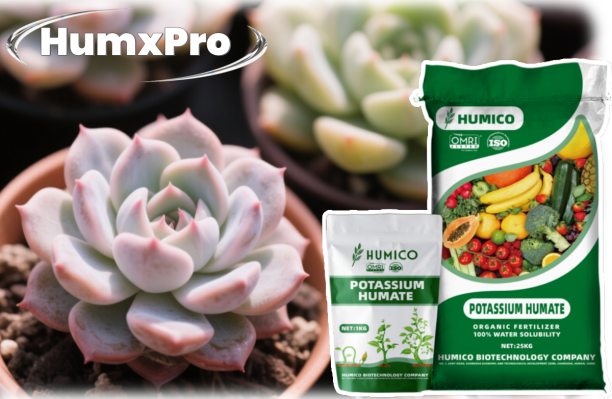
Do Succulents Really Need Fertilizer?
Succulents in particular are known for the adaptations that allow them to survive in environments where nutrients are scarce. They evolved to store water and require less fertilizer than the average houseplant. When potted though, the narrative goes in another direction.
In nature, potted succulents exist in tiny pockets of soil. That soil is depleted of nutrients before long, at which point these beautiful plants begin indicating that they’re in need of some extra love. To prevent your succulents from looking sad and unhealthy, it’s a great idea to fertilize them, particularly in their main growing season of spring and summer.
Nature vs. Pots: Nutrient Differences
In the wild, succulents grow in rocky soil with scarce nutrients. To survive, they have no choice but to adapt, slowing down growth and making do with what’s there. In a pot, however, soil dries out and nutrients leach away quickly.
Small pots deplete their food supply even faster. The mix you use plays a role as well. While gritty, fast-draining soils work magic for succulent roots, they retain less goodies. That’s why potted succulents usually require some supplemental feeding. Applying a balanced, low-nitrogen fertilizer at half-strength is ideal.
Listening to Your Plants’ Needs
Look out for washed-out color, stunted growth, or leggy stems. Here are the signs that your succulent is hungry. Understanding growth patterns goes a long way too.
If your plant starts being less active in spring or summer, it could be indicating that it needs fertilizer. Each kind, though, is a little different. Some, like echeveria, require more food than the slow-growing haworthia. Make sure you’re paying attention and only fertilizing when they’re growing.
What Happens Without Feeding?
As nutrients become depleted, leaves become smaller, colors less vibrant, and flowering ceases. Eventually, growth becomes stunted and the plant appears leggy.
Regular fertilizing every four to six weeks during their growing season will keep your succulents healthy and vibrant.
Succulent Nutrient Basics Explained
Succulents are prized for their plump flesh leaves and ability to withstand dry environments, lush and healthy when cared for with the perfect mix of nutrients. These plants depend on all three macronutrients—nitrogen (N), phosphorus (P), and potassium (K)—as well as micronutrients such as calcium (Ca), magnesium (Mg), and iron (Fe).
Understanding fertilizer needs is crucial. Fertilizer requirements fluctuate with the seasons, becoming necessary in spring and summer when your succulents are growing most vigorously. For the majority of succulent types, using a balanced, low-nitrogen fertilizer promotes healthy growth without making a plant leggy or soft-stemmed.
Understanding N-P-K Ratios
The N-P-K ratio indicates how much nitrogen, phosphorus, and potassium is in a fertilizer. For succulents, the ideal ratio is often close to 1:0.4:1.1-1.7. Too much nitrogen will cause soft, leggy growth and too much phosphorus can inhibit root and flower development.
For instance, a 2-7-7 fertilizer would be excessive in phosphorus for nearly all succulents. These ratios are usually clearly listed on common brands’ labels, making it simple to choose the proper one.
| Fertilizer Brand | N | P | K |
| Miracle-Gro Cactus | 2 | 7 | 7 |
| Espoma Cactus | 1 | 2 | 2 |
| Schultz Cactus Plus | 2 | 7 | 7 |
Why Succulents Need Less Nitrogen
Because succulents store water in their foliage, they require little nitrogen. Excess will lead to weak, leggy growth and increase their risk of rot. Their ideal nitrogen level is low, just enough to maintain vibrant foliage color and leaf form integrity.
This keeps the plants short and robust.
The Importance of Micronutrients
Micronutrients such as boron (B), manganese (Mn), and zinc (Zn) are essential for the process of photosynthesis and the development of new growth. Without them, succulents can become discolored or fail to thrive.
To prevent this, use a full-spectrum fertilizer, or supplement the soil mix with trace minerals. This prevents plants from becoming weak and dull.
What is the Best Succulent Fertilizer?
Succulents have unique fertilizer requirements that differ from many plants. Unlike most houseplants, these plants thrive in nutrient-poor soil, which is why they don’t necessarily need a lot of added nutrients. Choosing the appropriate succulent fertilizer is crucial for ensuring healthy plant growth, as the most favorable options provide controlled-release fertilizers that nourish without overwhelming the plant.
1. Liquid Feeds: Quick Nutrient Delivery
First, liquid fertilizers provide quicker results because the nutrients are directly delivered to the roots. They’re most effective when your succulents are actively growing, which is primarily in spring and summer. To protect succulent roots, a strong practice is to dilute all liquids to half strength.
Miracle-Gro Succulent Plant Food and Espoma Organic Cactus Liquid are top brands most suited for most succulents.
2. Slow-Release Pellets: Gradual Nourishment
Slow-release pellets dissolve over the course of weeks to provide ongoing nutrients. This is especially helpful for busy gardeners who may not have the time to feed their plants frequently. These come in organic form as well, but you’ll need a light sprinkle—roughly one tablespoon per six-inch pot.
Osmocote Smart-Release and Jobe’s Organics Succulent Fertilizer Spikes are well-known brands.
3. Organic Choices: Worm Castings & More
Organic options, such as worm castings or compost tea, enrich the soil mix with essential nutrients and microbes to promote healthy roots in succulent plants. Seaweed and fish emulsion are good options for succulent gardeners looking for natural fertilizers.
4. Synthetic Options: Targeted Formulas
Fast, targeted nutrients are essential for optimal growth. Formulas like Schultz Cacti Plus utilize a low 2-7-7 NPK ratio, making them suitable for succulent gardeners. Go easy on these fertilizers, as excess can severely damage root systems.
5. Ideal Nutrient Ratios for Succulents
A low-nitrogen, balanced fertilizer ratio—such as 1-1-1 or 2-1-1—prevents excessive growth in succulents. For many succulent gardeners, a nutrient ratio of 2-4-2 is just right to ensure optimal growth and meet the nutrient requirements of specific plants.
| Succulent Type | Ideal N-P-K Ratio |
| Echeveria | 2-1-1 |
| Jade Plant | 1-1-1 |
| Aloe Vera | 2-4-2 |
6. Comparing Organic vs. Synthetic Impacts
Organic fertilizers improve long-term soil health, while synthetic fertilizers yield rapid results; however, they can lead to salt accumulation over time. Most growers agree that a balanced fertilizer ratio benefits both the plant and the soil.
7. My Personal Favorites and Why (POV)
For best overall results, I continue to prefer compost tea and worm castings as natural fertilizers for consistent, healthy plant growth. Espoma’s liquid fertilizer works well and strong, too. Experiment with different succulent fertilizers to determine which one your plants respond to best.
How to Apply Fertilizer Correctly
A Little Goes a Long Way When fertilizing succulents, moderation is the name of the game. These plants respond very well to a balanced fertilizer, such as a 1-1-1 or 2-1-1 N-P-K ratio. Don’t forget, how you apply is almost as important as what you apply!
By simply following each step carefully, you’ll be able to maintain healthy roots, plump leaves, and prevent stunted growth. Read the package directions carefully, as each product may vary in strength and require different mixing. Fertilizers can be applied to plants in their growing season, usually in the spring and early summer months.
Cease fertilization in the fall and winter months when most succulents go dormant. Mistake #1: Overfeeding It’s an easy trap to fall into. Feed your succulent every 4 to 6 weeks, or as otherwise needed.
Always Dilute Your Fertilizer
Fertilizers are usually super concentrated, and applied at full strength can burn fragile succulent roots to a crisp. A good rule of thumb is to dilute at least half of the recommended strength.
After mixing thoroughly, pour the diluted mixture into a clean watering can and apply directly to the soil. This ensures that the roots can take up the nutrients with no danger of burning, an effect that is caused by undiluted mixes.
Diluted solutions provide a slow, even feed, which is more in line with the plants’ natural uptake.
Water Before You Feed
Succulents should be planted in moist—not soggy—soil when fertilizing. By watering first, you help moisture move uniformly throughout the soil profile, allowing roots to absorb the nutrients rather than allowing them to get scorched.
Water the ground completely before applying fertilizer and allow time for moisture on the surface to dissipate. Then, use the fertilizer combination.
This practice not only prevents fertilizer burn, but encourages strong root development by maintaining consistent moisture levels.
Apply to Soil, Not Leaves
Always apply fertilizer to soil, never leaves. It can lead to leaf spotting or rot, particularly in succulents. To ensure the best uptake, pour the fertilizer mix directly at the base, within the root zone.
Again, try to cover evenly, but don’t create a huge mess trying to avoid splashing the leaves.
Do’s and Don’ts for Fertilizing Succulents
- Do use a balanced or slow-release fertilizer
- Do dilute to half-strength
- Do fertilize only during the growing season
- Do watch for signs of overfeeding
- Don’t fertilize dry soil
- Don’t apply to leaves
- Don’t feed during dormancy
- Don’t ignore differences among succulent types
Timing Your Succulent Feeding Schedule
Knowing when to feed your succulents is just as important as knowing what to feed them. Proper timing coincides with their natural growth patterns, allowing your plants to take full advantage of nutrients and cycle them without excess.
For succulents in the U.S., growing seasons are typically during spring and summer, when days become longer and temperatures increase. When the days lengthen, from mid-spring to early fall, their demand for food increases.
As the seasons shift to fall and winter, expect a slow-down, with most varieties going dormant. Feeding at these lulls can shock plants or produce leggy plants.
When to fertilize? Begin fertilizing in early to mid-spring, as soon as you see signs of new growth. Continue this each 4 to 6 weeks until late summer, then discontinue as growth will begin to slow down.
If you have recently potted up new succulents, wait at least six months before adding fertilizer. Certain ones, such as Crassula and Sedum, are quicker growing and require more nutrients, while many cacti will thrive on less.
Here are some practical seasonal tips:
- Spring: Start feeding as growth resumes.
- Summer: Continue at 4–6 week intervals.
- Fall: Stop fertilizing as days shorten.
- Winter: Avoid feeding; let plants rest.
Fertilize During Active Growth Only
Fertilize during active growth only. Succulents will always respond best to fertilizing when they’re actively growing. Dormant plants absorb less nutrients, causing excess fertilizer to accumulate and damage roots.
Signs that a succulent is in a period of active growth are visible new leaves, new shoots, or rapid increase in size. Keep an eye out for these cues and change accordingly when seasons start to shift.
How Often Should You Fertilize?
For the majority of succulents, every 4 to 6 weeks during the growing season is sufficient. Consider pot size, soil mix, and plant type. Fast growers such as Sedum should be fed more often, while cacti require less.
Look for healthy, firm leaves as an indicator of a successful feeding routine and make adjustments if you notice leaves becoming soft or yellow.
Checklist for feeding:
- Confirm active growth.
- Apply a half-strength, balanced fertilizer (1-1-1 or 2-1-1 NPK).
- Monitor leaf color and firmness.
- Adjust timing for pot size and soil type.
Adjusting for Indoor vs. Outdoor Plants
Since outdoor succulents tend to grow quicker, you’ll likely need to feed them more often. Adjusting for indoor vs outdoor plants is important. Indoors, there’s less light and slower growth, so they need less frequent feeding.
Look for indicators such as fading leaves in an indoor setting or yellowing leaf tips when outside. Monitor the appearance of your plants and note how much available light they receive.
US Regional Climate Considerations
Climate alters the playing field. In hot, dry environments such as Arizona, succulents metabolize water and nutrients at a high rate. In cooler, wetter regions, feeding and growth slow down considerably.
Modify your feeding frequency and amount according to the climate you live in.
| Region | Growing Season | Adjustments |
| Southwest | Early spring–fall | Water more, feed more |
| Pacific Coast | Spring–early fall | Watch for cool snaps |
| Northeast/Midwest | Late spring–summer | Shorter feeding window |
| Southeast | Spring–early fall | Watch for humidity issues |
Spotting Over-Fertilization Problems
Identifying over-fertilization problems early is key to maintaining healthy succulents. This can be particularly crucial in urban settings such as San Francisco, where outside and indoor environments may vary greatly.
These tough-as-nails plants require much less fertilizer than others due to their nature having developed in low nutrient soils. Over-fertilization, particularly with nitrogen, creates more problems than it solves. Staying alert to warning signs and adhering to a conservative fertilizing routine will ensure that your precious succulents continue to flourish.
Signs of Fertilizer Burn
Signs of Fertilizer Burn Thankfully, fertilizer burn isn’t hard to recognize, if you know what to look out for.
Leaf tip burn Leaf tips will start to turn brown or black, and you may notice soft, mushy areas or leaves that decay. Occasionally leaves curl up or drop at the slightest contact.
This occurs when salts from fertilizers accumulate and leach water from plant cells. These issues are usually the result of high-concentration fertilizers or applying them during dormancy. Remedying fertilizer burn begins with pruning away brown or otherwise damaged leaves and flushing the soil several times with water to leach out excess salts.
Prevention is always the best strategy! Apply a low-nitrogen, half-strength fertilizer only once or twice during spring or summer, and avoid fertilizing during fall or winter.
Leaf Discoloration and Texture Changes
Nutrient deficiencies Nutrient imbalances appear as yellow, pale, or otherwise discolored spots on leaves. Over-fertilized succulents can develop thick, blistered or wrinkled leaves as well.
These changes in leaf texture are indications of either stress or excess nutrients. To diagnose, look at whether the plant was over-fed recently, and see if the soil appears crusty. Regular monitoring can help identify over-fertilization problems before they become more severe.
How to Flush Excess Nutrients
If you believe that you have a case of over-fertilization, flushing the soil is a good way to go.
Flushing With WaterTo wash salts out of the root zone, use a large volume of water. Allow enough water to drain so that root rot doesn’t occur.
Flushing every few months, or at first sight of symptoms, allows the soil to find equilibrium and maintain a healthy root zone. This process allows the succulent to heal and prevents disease from weakening your plant.
Soil Quality and Fertilizer Uptake
Soil quality affects succulent fertilizer uptake. Fertilizer uptake is less efficient if the succulent’s soil is lower quality. These plants originated from arid environments where soils drain quickly and nutrients are limited.
In urban gardens across the U.S., the right soil mix and attention to detail help succulents grow strong without overfeeding. The most expensive fertilizer is useless if your soil isn’t providing roots with the proper mix of air, water, and nutrients.
Why Drainage is Non-Negotiable
Drainage is key to happy succulents. Without it, water puddles in the container, roots become waterlogged, and root rot kicks in within days. When drainage is poor, fertilizer salts are prevented from leaching down through soil, where they can accumulate in toxic concentrations at the root zone.
To ensure adequate drainage, incorporate a coarse soil amendment such as sand, pumice, or perlite. Pots that have drainage holes in the bottom are good to use, as well. Perhaps a better example is an excellent cactus mix available at many local garden centers, which serves the needs of most indoor succulents.
Soil Microbes: Tiny Helpers
Healthy soil is alive with microbes that labor behind the scenes. These microscopic allies decompose organic matter, such as that found in compost tea, and deliver nutrients in forms that are readily absorbed by roots. Increased microbial activity leads to a reduced reliance on chemical fertilizers.
Apply some compost or compost tea monthly in the spring and summer. This will feed the microbes and keep them happy. Don’t go chemical crazy, as chemicals kill beneficial microbes.
How Soil pH Affects Feeding
Soil pH determines the nutrients that are available to plant roots. The optimal soil pH for most succulents is in the range of 6.0 to 7.0. Outside this narrow window, iron and phosphorus nutrients can become fixed or rendered inactive.
You can test your soil pH with an inexpensive meter available at garden centers. If pH needs to be adjusted, lime will increase it and sulfur will decrease it. Choose fertilizers with reasonably balanced N-P-K ratios (example 1-1-1 or 2-1-1) that align with your soil’s pH.
Maintain consistent pH levels to enable root systems to feed throughout the season.
Busting Succulent Fertilizer Myths
When it comes to fertilizing succulents, it may seem straightforward, but a number of myths obscure the truth. By knowing what they really need, you’ll ensure healthy plants without unnecessary waste or fertilizer pollution.
Let’s bust some succulent fertilizer myths and set the record straight on how to feed succulents properly, according to science and experience.
Myth: Succulents Thrive on Neglect
Myth: Succulents do best when neglected. This one has become quite popular! If you neglect to fertilize them, they’ll become leggy and grow in fits and starts.
Though they are well adapted to extreme environments, succulents do thrive with regular feeding, particularly through the growing season. Quality balanced fertilizer, applied at the proper dilution, promotes healthy root systems and vibrant foliage.
For example, a jade plant given diluted rice water in spring often grows fuller than one left to “tough it out.” Like all care, it’s about finding the right balance—too much and you’ll burn roots, too little and they’ll be starving.
Myth: Any Plant Food is Fine
Myth: Any plant food is fine. Wrong. These plants require less nitrogen than most houseplants, but a little more potassium and magnesium.
Fertilizers labeled specifically for cacti or succulents typically meet these needs. Like Epsom salt, which provides the magnesium necessary for chlorophyll and should be applied sparingly.
Homemade mixes such as eggshells or fish tank water provide tons of vital minerals for your plants. When mismanaged, they can be vehicles for pest invasion and toxicity.
Always be sure to look at the NPK ratio and recommended dilution rates before use so you’re not wasting money or polluting.
Myth: Fertilizing Speeds Up Growth
Over-fertilizing won’t speed up growth and can be detrimental to your plants. Too much fertilizer leads to nutrient leaching or root-burn, damaging your plants and the environment.
The exception is succulents, which benefit from slow, steady feeding in spring with a balanced, all-purpose mix for the best results.
Too Much of a Good Thing Overfeeding creates succulent tissue that is soft, weak and lackluster in color. Good culture over more culture any day.
Conclusion
To promote healthy growth with an abundance of color, use a weak, all-purpose fertilizer. An all-purpose 10-10-10 or 8-8-8 blend will do the job nicely. Feed once in early spring, possibly again in midsummer, but not in winter. Always apply it while watering first, so roots do not burn. If you notice that your leaves are turning yellow or getting mushy, skip the next feed. Go easy on it—these plants prefer their nutrients on the sparse side. Proper soil allows roots to absorb exactly what they require. Forget the coffee ground or eggshell myths; science has proven fuss-free care works. Want to see your plants grow healthy and strong? Tell us what you use, what you’ve learned, what you’re experimenting with, what you want to know—let’s trade ideas and get greener together. With a little knowledge and the right fertilizer, your succulents will be well on their way to thriving.
Frequently Asked Questions
Do succulents need fertilizer to thrive?
No, succulents won’t die without fertilizer, but applying succulent fertilizers promotes stronger growth and vibrant color. In San Francisco’s moderate climate, even a small amount of granular fertilizer can have a big impact.
What type of fertilizer is best for succulents?
For best results, use a balanced liquid fertilizer mixed to half strength, such as a 10-10-10 or 8-8-8 formula, which provides essential nutrients for optimal growth.
How often should I fertilize my succulents?
Only apply a balanced fertilizer once in spring and once in summer, as frequent fertilization is unnecessary when your succulents are dormant in fall and winter.
Can I use regular houseplant fertilizer on succulents?
Yes, use regular houseplant fertilizer, but always dilute it to half or quarter strength to prevent burning your succulents’ roots and ensure optimal growth.
What are signs of over-fertilizing succulents?
Yellowed leaves, mushy stems, or lack of growth are typical indicators that your succulents indoors may need more nutrients. If you see any of these signs, flush the soil mix with water immediately.
Does soil quality affect fertilizer uptake in succulents?
Soil mixes that drain well allow roots to access essential nutrients without being overly saturated, preventing root rot.
Are organic fertilizers safe for succulents?
Are organic fertilizers safe for succulents? Using a balanced fertilizer ratio in moderation prevents excessive nutrient buildup.
Written by Humico | Organic Fertilizer Manufacturer
Original article source: https://www.ihumico.com/what-is-the-best-fertilizer-for-succulents-plants/


