
If you are a fertilizer manufacturer or distributor preparing to develop humic acid fertilizer products, or large farm owner looking to try humic acid fertilizers, this article will guide you from the very beginning to understand everything about humic acid. Whether you are a beginner or an expert, this article is perfect for you.

What Is Humic Acid?
Humic acid is a natural organic macromolecular compound and a major component of humus. It is not a single acid, but rather a mixture composed of many complex molecules containing functional groups such as carboxyl and phenolic hydroxyl groups.
Humic Acid Sources And Formation
Humic acid is a product formed from the decomposition of plant and animal remains by microorganisms and long-term chemical transformations (a process known as humification). Industrially, it is usually extracted from raw materials such as lignite, weathered coal, and peat.
Types And Forms Of Humic Acid Products
At present, common humic acid products on the market can be classified by composition into humic acid raw material, potassium humate (potassium humic acid), sodium humate (sodium humic acid), potassium fulvate (fulvic humic acid), and amino humic acid (humic amino shiny ball).
By physical form, they can be divided into humic acid powder, flakes, crystals, granules, micro-granules, cylinders, balls, and liquid forms.
Humic Acid Function
Improve Soil Structure
Humic acid molecules can bind soil particles, promote the formation of soil aggregates, and break up compacted clay.
At the same time, they increase the cohesion between sand particles in sandy soil, improving soil aeration.
Therefore, if you want to enhance the soil-improving function of your fertilizer products, adding some humic acid is an excellent choice.
Enhance Soil Water and Nutrient Retention
The porous structure of humic acid acts like a sponge, storing water and reducing moisture loss during drought.
It also adsorbs easily leached nutrients (such as nitrogen and potassium), extending their availability in the soil.
Regulate Soil pH
Humic acid contains both acidic and alkaline functional groups, giving it a buffering effect. It can adjust overly acidic or alkaline soils to near-neutral levels, suitable for most crops.
If your region has overly acidic or alkaline soil, humic acid fertilizers are sure to become one of your best-selling products.
Chelate Secondary and Micronutrients
Humic acid can combine with elements such as iron, zinc, calcium, and magnesium — which are otherwise difficult for plants to absorb — forming stable chelates. These are transformed into plant-available forms, helping to alleviate nutrient deficiencies for your crops.
Activate Soil Nutrients
Humic acid can release fixed elements like phosphorus and potassium in your soil (e.g., converting insoluble phosphorus into available phosphorus), freeing nutrients bound by soil colloids and improving nutrient use efficiency.
Promote Soil Microbial Activity
Humic acid can provide carbon and energy for beneficial soil microorganisms such as nitrogen-fixing bacteria, phosphate-solubilizing bacteria, and actinomycetes. This increases microbial population and activity, accelerating organic matter decomposition and nutrient cycling in your soil.
Stimulate Plant Growth
Humic acid can promote root cell division, increasing root length, the number of root hairs, and lateral root density of your crops.
It also regulates plant hormone balance, enhancing seed germination, seedling growth, flowering, and fruiting.
Enhance Plant Stress Resistance
Humic acid can help your plants develop stronger physiological structures (such as thicker leaf cuticles), improving resistance to drought, low temperatures, salinity, and pests or diseases, thus reducing stress-related growth inhibition.
Humic Acid Benefits For Soil And Plants
For soil, humic acid can improve your soil structure, enhance nutrient and water retention capacity, regulate soil pH, and promote microbial activity in soil.
For plants, humic acid can increase your crops nutrient absorption efficiency, enhance stress resistance, and improve crop quality and yield.
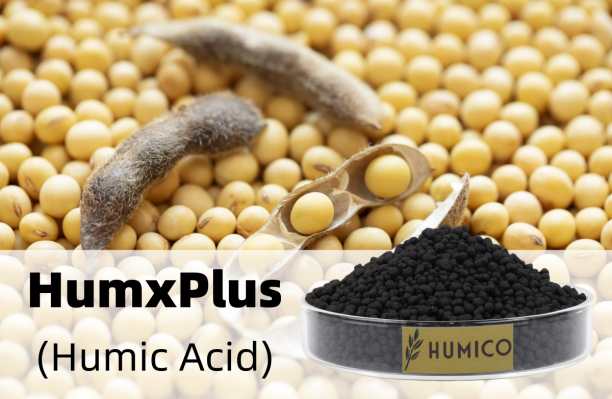
Humic Acid For Soybeans
During the soybean seedling stage, humic acid promotes uniform and vigorous seedling growth while reducing weak seedlings.
During the flowering and pod-setting stages, it helps reduce flower and pod drop, increases the number of pods per plant and seed weight, and raises the protein and oil content in the seeds. Ultimately, this leads to higher soybean yield and improved quality.
If you have many customers are soybean growers, choosing humic acid fertilizers will definitely help you expand your business.
Humic Acid for Lawn
Humic acid can stimulate the growth of turfgrass fine roots and increase root hair density, helping the lawn stay green for longer, enhancing resistance to foot traffic and drought, while also reducing yellowing and patchy bald spots.
If you want to develop a lawn fertilizer product, humic acid is one of the indispensable ingredients.
Humic Acid Applications
Humic Acid Agricultural Uses
Soil Improvement
humic acid can create a suitable environment for your crops growth.
Crop Care
From seed to seedling, and from growth to flowering and fruiting, humic acid can promote your plants development, increases yield, and improves quality.
Fertilizer Efficiency Enhancement
When mixed with chemical fertilizers, humic acid extends fertilizer effectiveness and reduces the required amount of chemical fertilizer you use.
Livestock Feed Additive (As Sodium Humate)
Promote Intestinal Health
Humic acid can form a protective film in the animal’s intestines, reducing the attachment of harmful bacteria (such as E. coli), alleviating diarrhea and enteritis, and improving feed digestion and nutrient absorption.
Enhance Immunity
Humic acid can strengthen the antioxidant capacity of livestock and poultry, reduces stress reactions (caused by transport or environmental changes), and lowers the risk of disease.
Improve Production Performance
For laying hens, Humic acid will increase egg production and improves eggshell quality.
For pigs, it promotes growth, shortens the fattening period, and helps reduce manure odor.
So, if you add sodium humate to your feed products, it will definitely make your products stand out in the market.
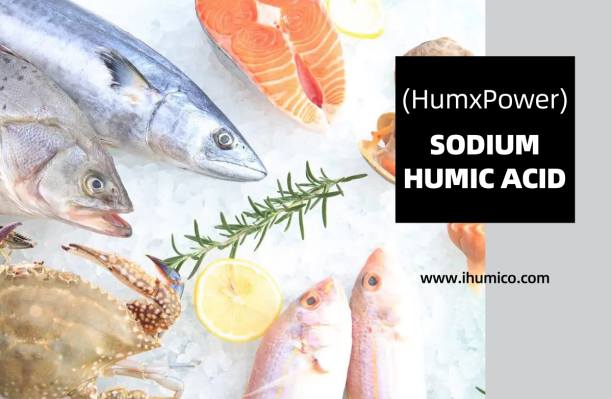
Aquaculture Water Treatment
Purify Water Quality
Humic acid can adsorb organic pollutants in your water, such as residual feed and feces, reducing ammonia nitrogen and nitrite levels. This helps lower the risk of eutrophication and improves water transparency.
Stabilize the Aquatic Environment
Humic acid can help regulate your water’s pH, preventing drastic fluctuations in acidity and alkalinity.
It also provides nutrients for beneficial algae (such as diatoms), maintaining algal balance and increasing dissolved oxygen levels.
Protect Aquatic Animals
Humic acid can reduce irritation from harmful substances in your water to the gills and body surfaces of fish, shrimp, and crabs. It helps prevent diseases such as gill rot and skin ulceration, improving survival rates.
Wastewater Treatment
Remove Organic Matter
Humic acid can adsorb organic pollutants in your wastewater, such as COD (Chemical Oxygen Demand) and BOD (Biochemical Oxygen Demand), thereby reducing the load on subsequent treatment processes.
Precipitate Heavy Metals
Humic acid can chelate heavy metal ions such as lead, cadmium, and copper in wastewater, forming insoluble precipitates that can be removed from your water through solid-liquid separation.
Aid Flocculation
When used together with flocculants (such as polyaluminum chloride), humic acid can enhance floc strength, improve the sedimentation efficiency of suspended solids in your wastewater, and reduce the turbidity of the treated water.
Building Materials
Concrete Additive
Adding humic acid to concrete can reduce your water consumption, improve workability, enhance impermeability and frost resistance, and delay aging and cracking of your concrete.
Wall Material Improvement
When used in your wall materials such as aerated bricks and blocks, humic acid can reduce material density, improve thermal insulation performance, and enhance moisture resistance, thereby minimizing problems like dampness and mold.
Cosmetics
Moisturizing and Nourishing
Humic acid contains abundant hydrophilic groups that can attract moisture from the air, forming a moisturizing layer on your skin surface. This helps relieve dryness and is suitable for products for dry skin.
Antioxidant and Anti-Aging
Humic acid can neutralize free radicals on your skin, reducing damage caused by UV rays and environmental pollution. It helps delay the appearance of fine lines and dullness, making it ideal for serums, creams, and other anti-aging products.
Gentle Conditioning
Humic acid is mild and minimally irritating to sensitive skin. It can help regulate skin surface pH, strengthen your skin barrier, and reduce discomfort such as redness and itching.
Application Rate
Agricultural Planting Field (Most Common Application Scenario)
Agriculture is the field where humic acid usage varies the most, and applications should be differentiated according to crop type, growth stage, and application method.
Soil Application
Applicable Scenario: Before sowing or during the crop growth period, applied with base fertilizer to improve compacted or saline-alkali soil.
Product Types and Dosage:
Solid Humic Acid (50%–70% content): 750–2,250 kg/ha; for clay or saline-alkali soil, the dosage can be increased to 1,500–3,000 kg/ha.
Sodium/Potassium Humate (Powder, ≥60% content): 75–180 kg/ha; can be mixed with organic or compound fertilizers.
Foliar Spray
Applicable Scenario: During key stages such as seedling and pre-flowering periods, to quickly supplement nutrients and relieve deficiency or stress.
Product Types and Dosage:
Liquid Humic Acid (10%–30% content): Dilute before use at a ratio of 1:500–1:1000 (1 liter of product mixed with 500–1000 liters of water). Spray 450–750 L of solution per hectare.
Note: Spray every 7–10 days, for 2–3 consecutive applications. Avoid overly high concentrations to prevent leaf burn.
Fertigation / Drip Irrigation
Applicable Scenario: Suitable for protected agriculture (such as greenhouse vegetables and fruit trees) or large-scale planting; applied via irrigation systems for labor efficiency.
Product Types and Dosage:
Liquid Humic Acid (10%–30% content): 30–75 L/ha; apply evenly with irrigation water, 2–3 times during the growing season.
Solid Humic Acid (Granular Type): 150–300 kg/ha; dissolve or pre-mix with water before drip irrigation to prevent clogging of pipelines.
Livestock and Poultry Feed (Using Sodium Humate as an Example)
Feed-grade sodium humate (content ≥40%): Add 0.5%–3% of the feed weight, i.e., 5–30 kg per 1,000 kg of feed.
Aquaculture Water Treatment
Liquid humic acid (15%–25% content): Apply 75–225 liters per hectare of water area (with 1 meter depth) by direct spraying.
Wastewater Treatment
Industrial-grade humic acid (powder): Add 50–200 grams per ton of wastewater, used in combination with a flocculant.
Building Materials
Concrete Additive
Product Form: Mostly sodium or potassium humate solution (active content 20%–30%), or compound additives blended with other admixtures such as water reducers.
Application Rate: Add 0.1%–0.3% of the cement weight in the concrete mixture.
Wall Material Improvement (e.g., Aerated Bricks, Blocks, etc.)
Product Form: Mostly solid humic acid powder (active content 50%–70%) or pre-treated composite humic acid powder.
Application Rate: Add 0.5%–1.5% of the total raw material weight (such as fly ash, cement, lime, etc.).
What Are The Signs Of Humic Acid Deficiency?
In Agriculture
Soil is the main carrier of humic acid. A deficiency in humic acid is first reflected in the deterioration of soil properties — such as degraded your soil structure, reduced fertility, imbalanced pH, and low microbial activity. These issues directly affect your plants growth, leading to poor root development, decreased stress resistance, and ultimately lower your yield and quality.
In Aquaculture
A lack of humic acid in your aquaculture water can result in low transparency and easy turbidity. Fish and shrimp may frequently surface due to oxygen deficiency.
Additionally, beneficial algae such as diatoms become scarce, while harmful algae like cyanobacteria multiply rapidly, leading to algal blooms (“water bloom” phenomenon).
Comparison With Other Soil Amendments
Humic Acid Vs. Fulvic Acid
Humic acid and fulvic acid are both humic substances.
Humic acid has a large molecular weight and provides long-lasting effects for your soil and plants.
Fulvic acid has a small molecular weight and acts quickly on your soil and plants, making it more effective for short-term root stimulation and chelating micronutrients to rapidly correct nutrient deficiencies.
Humic Acid Vs. Compost
Humic acid is a high-purity organic extract with clear and specific components. It requires a small dosage and provides targeted effects such as pH regulation and nutrient absorption promotion, showing visible results within 1–2 weeks.
Compost is a mixture of organic materials (including humic substances and undecomposed residues). It has a complex composition, needs large application amounts, and focuses on long-term soil fertility improvement, usually showing effects after 1–2 months. Therefore, compost is better for restoring poor and degraded soils.
Humic Acid Vs. Biochar
Humic acid works through chemical chelation and biological stimulation.
Biochar is a porous carbon-based material that mainly functions through physical adsorption. But it lacks biological activity and therefore needs to be used together with organic fertilizers to achieve the best results.
Humic Acid Vs. Chemical Soil Conditioners
Humic acid is derived from natural organic matter, making it ideal for green planting and long-term soil health improvement.
Chemical conditioners (such as lime or gypsum) are synthetic or mineral-based products. They act quickly and effectively for specific issues like rapid pH correction, but long-term use can harm soil ecology.
How To Choose High-Quality Humic Acid Products
Observe the product appearance, solid humic acid should be free from clumps or unpleasant odors (such as sour or moldy smells), liquid humic acid should be clear dark brown to black, with no sediment or layering.
Check the label for “Humic Acid Content”, not just “Total Organic Matter.”
Review the test report and give priority to products tested by third-party institutions.
Test solubility performance, a high-quality product should dissolve quickly and form a uniform solution without residue.
Check the pH value after dissolution, for agricultural use, humic acid solutions should have a pH between 7 and 9.
Finally, choose products from reputable brands and reliable humic acid suppliers.
Storage And Shelf Life
Solid Humic Acid
Moisture prevention is the key, avoid moisture absorption and caking, which can reduce your product activity.
Store in a dry, well-ventilated warehouse or indoor area, with the ground elevated and away from water sources and damp walls.
Liquid Humic Acid
Protect from light and high temperature to prevent layering or deterioration.
Store your products in a cool, shaded place, avoid direct sunlight, and keep the ambient temperature between 5°C and 35°C. Avoid freezing or prolonged exposure to heat.
Recent Advances In Humic Acid Research
- In recent years, studies have found that humic acid can act as an “electron transfer mediator,” activating the metabolic activity of specific microorganisms in your soil such as Desulfovibrio and Pseudomonas species.
- Peat-based humic acid has become a major research focus in recent years due to its high bioactivity. It contains a richer composition of low-molecular-weight fulvic acids, active polyphenols, and natural enzyme precursors, with concentrations of functional groups such as carboxyl and hydroxyl being 1.5 to 2.3 times higher than those in lignite-derived humic acid.
FAQ
How to Determination Of Humic Acids In Water Samples?
The core of measuring humic acid in water samples is to separate and concentrate it while removing interfering substances, followed by quantitative analysis using instruments. Common methods include spectrophotometry and high-performance liquid chromatography (HPLC).
Your choice of method depends on the required detection accuracy and laboratory conditions, with careful control of pH and interfering substances during the procedure.
Does Compost, Charcoal, Cow Dung Have Humic Acid?
Yes, compost, charcoal, and cow manure all contain humic acid, but their content, form, and activity vary greatly.
The key difference lies in the degree of organic matter decomposition and the efficiency of its transformation.
How To Extract Humic Acid From Compost?
The core method for extracting humic acid from compost is the alkali extraction–acid precipitation method, which is the most classic and easy-to-operate approach.
This method takes advantage of humic acid’s property of being soluble in alkali but insoluble in acid to separate and remove impurities, ultimately obtaining crude humic acid.
It is suitable for laboratory or small-scale home extraction.
How To Increase Humic Acid In Soil Naturally?
To naturally increase humic acid in your soil, the key is to continuously supply decomposable organic materials and create a favorable environment for soil microorganisms, allowing organic matter to gradually transform into humic acid during decomposition.
Applying well-decomposed organic fertilizers or compost, returning crop residues such as straw during fallow periods, and avoiding excessive tillage. The crucial principle is long-term consistency rather than short-term intensive efforts.
How To Combine Humic Acid With Npk Fertilizers For Best Results
Combining humic acid with NPK fertilizers is essentially aimed at using humic acid’s adsorption and chelation properties to enhance the nutrient use efficiency of NPK, while also improving soil structure and promoting root growth, preventing fertilizer burn or nutrient loss.
Typically, the two can be mixed and applied evenly. Alternatively, humic acid can be used as a basal fertilizer with NPK as a top-dressing, or water-soluble humic acid can be proportionally combined with water-soluble NPK fertilizers to prepare a nutrient solution for application.
Achieving the best results depends on factors such as your crop type, growth stage, and method of application.
What Is An Alternative To Humic Acid?
- Fulvic Acid: Fulvic acid is a humic substance, belonging to the same category of humic substances as humic acid.
- Seaweed Extracts: Seaweed extracts are another popular natural biostimulant. Their functions overlap with humic acid in many ways, but in certain aspects, they can offer additional advantages.
- Amino Acids: Amino acids are also commonly used biostimulants in agriculture, promoting plant growth, nutrient uptake, and stress resistance.
Written by Humico | Organic Fertilizer Manufacturer
Original article source: https://www.ihumico.com/what-is-humic-acid/


